Nexxen Launches Key Political Tools for Advanced Campaign Control and Voter Reach
Linkedin Icon-xtwitterlogo-black Innovation, including a real-time political dashboard, complements full-stack solution to drive performance, create efficiency and mitigate data loss Nexxen SSP selected as News Corp’s preferred SSP for political PMP deals New York, July 25, 2024 – Nexxen, a global, unified advertising technology platform with deep expertise in video and Connected TV (“CTV”), today announced the launch of key tools for political advertisers, providing them with advanced controls and unique audience data to make informed and granular decisions that drive campaign success. Nexxen’s end-to-end technology stack encompasses a fully integrated demand-side platform (“DSP”) and supply-side platform (“SSP”), which enhance performance, improve efficiency and minimize data loss, thus maximizing political audience reach throughout the entire campaign lifecycle. During the initial discovery phase, advertisers can utilize unique data and applications found in the Nexxen Data Platform. This valuable data is sourced from various channels, such as audience targeting and strategic data partnerships as well as Nexxen Discovery, a real-time market research platform that analyzes content engagements and user behavior across digital, social and TV on-demand. As campaigns launch – either through Nexxen or another DSP and SSP – political advertisers can leverage Nexxen’s advanced measurement suite to gain deep insights into the impact of each campaign. Further, in 2024, five new offerings give advertisers advanced controls of their campaigns’ reach and precision. Political District Targeting: A geo-targeting feature that allows advertisers to target by US Political district (Congressional District, State Senate, State House/Assembly) within the platform directly. Political District Targeting allows for more granular and relevant targeting based on campaign goals. Campaign End Times: A feature that allows advertisers to optimize spend more efficiently with the ability to update their campaign end time within the Flight Schedule section to a specific time, rather than the industry default 11:59 PM. Political Dashboard, Powered by Nexxen Discovery: An easy-to-use, panel-based dashboard provides national- and state-level battleground candidate and issue analysis, including public sentiment and week-over-week change in content engagement, so advertisers can identify and activate custom voter audiences. These audiences can then be pushed directly to the Nexxen DSP for streamlined media buy activation on CTV and video. Proximic by Comscore TV Political Audiences Partnership: This augmentation of Nexxen’s partnership with Comscore enables political advertisers to retarget custom audiences who have previously been exposed to political ads for President, Congress, Governor and Ballot Referendums to ensure their message stays top-of-mind for voters. The Proximic by Comscore linear retargeting solution can be utilized for reach extension, to amplify frequency and to increase share of voice. News Corp’s Preferred SSP for Political Private Marketplace (“PMP”) Deals: Media company News Corp has selected Nexxen as its preferred SSP for political PMP deals, enabling detailed audience targeting across premium content using data such as congressional districts, voter registration, age, ethnicity and more. This collaboration will ensure that political advertisers can achieve more precise and effective campaign outcomes, reaching voters with greater accuracy and elevating campaign impact on inventory including the New York Post and Dow Jones. “Nexxen’s platform maximizes political dollars by providing advertisers with access to real-time voter data and the ability to reach those voters quickly, with precision and control,” said Ariel Deitz, Vice President of Enterprise Partnerships at Nexxen. “With our full-stack technology and Streaming DNA core, we are helping our political advertisers maximize their frequency controls and make smarter decisions on what impressions to buy for their ad campaign.” About Nexxen Under the parent Company Tremor International (AIM / NASDAQ: TRMR), Nexxen empowers advertisers, agencies, publishers and broadcasters around the world to utilize video and Connected TV in the ways that are most meaningful to them. Comprised of a demand-side platform (DSP), supply-side platform (SSP), ad server and data management platform (DMP), Nexxen delivers a flexible and unified technology stack with advanced and exclusive data at its core. Our robust capabilities span discovery, planning, activation, measurement and optimization – available individually or in combination – all designed to enable our partners to reach their goals, no matter how far-reaching or hyper niche they may be. For more information, visit www.nexxen.com. Forward-Looking Statements This press release contains forward-looking statements, including forward-looking statements within the meaning of Section 27A of the United States Securities Act of 1933, as amended, and Section 21E of the United States Securities and Exchange Act of 1934, as amended. Forward-looking statements are identified by words such as “anticipates,” “believes,” “expects,” “intends,” “may,” “can,” “will,” “estimates,” and other similar expressions. However, these words are not the only way Nexxen identifies forward-looking statements. All statements contained in this press release that do not relate to matters of historical fact should be considered forward-looking statements, including without limitation statements regarding the benefits associated with the any Nexxen partnership, Nexxen’s products and platforms including the Nexxen Political Tools, Data Platform and proprietary identity graph. These statements are neither promises nor guarantees but involve known and unknown risks, uncertainties and other important factors that may cause Nexxen’s actual results, performance or achievements to be materially different from its expectations expressed or implied by the forward-looking statements, including, but not limited to, the following: negative global economic conditions; global conflicts and war, including the current terrorist attacks by Hamas, and the war and hostilities between Israel and Hamas and Israel and Hezbollah, and how those conditions may adversely impact Nexxen’s business, customers, and the markets in which Nexxen competes. Nexxen cautions you not to place undue reliance on these forward-looking statements. For a more detailed discussion of these factors, and other factors that could cause actual results to vary materially, interested parties should review the risk factors listed in the Company’s most recent Annual Report on Form 20-F, filed with the U.S. Securities and Exchange Commission (www.sec.gov) on March 6, 2024. Any forward-looking statements made by Nexxen in this press release speak only as of the date of this press release, and Nexxen does not intend to update these forward-looking statements after the date of this press release, except as required by law. Nexxen, and the Nexxen
Nexxen adds CTV tools to tap into political ad market growth

Our Response to Google’s Recent Decision
Earlier this week, Google announced that it was not going to deprecate third-party cookies in Chrome – a decision that’s garnered significant attention throughout our industry. As a beta partner with Google’s Privacy Sandbox, Nexxen had an in-depth understanding of the developments and concerns that led to this reversal. Despite this decision, though, the evolving landscape of privacy regulations and industry-wide signal loss still demands a robust identity resolution solution, and we firmly believe that a scalable approach to identity is essential for creating the best online experiences for buyers, sellers and consumers alike. Having alternative identity-based solutions, in addition to continuing to support cookies, is crucial for everyone in our ecosystem to pursue more robust opportunities across devices and platforms. And at Nexxen, we take an agnostic approach to identity – our comprehensive, four-pronged strategy is designed to provide flexibility and ensure coverage and reach across all channels. More specifically, this approach involves: Universal ID SupportWe will support all major universal IDs, allowing us to create customized private marketplaces (PMPs), build target audiences and run campaigns through Nexxen DSP and Nexxen SSP. We are fully integrated with RampID, working on Unified ID 2.0 integration, and offer pass-through support for major universal IDs in our SSP. As new universal identifiers gain traction, we will support those as well, ensuring our clients have access to the most effective resources available. Unified Identity GraphOur Unified Identity Graph combines multiple identity solutions into a single system for smooth cross-device targeting. This system allows for unified bidding across various IDs, boosting revenue potential and increasing reach. It also improves frequency controls at the device, person and household levels, providing a seamless and efficient advertising experience. Contextual Solutions Nexxen’s proprietary contextual solutions, such as TV Content Targeting and Smart Contextual segments, enable advertisers to expand their reach across devices in a privacy-safe manner. Additional contextual solutions include Predictive Audiences and traditional keyword targeting, offering a wide range of options to meet specific campaign needs while maintaining user privacy. Supply-Side Data and Curation Through Nexxen SSP, advertisers can connect directly with premium publishers, gaining access to first-party data for precise audience targeting. Our extensive supply footprint allows us to create curated PMPs and site lists for specific campaign requirements – which includes first slot ad inventory, high-attention content, sustainability and more – ensuring our clients’ campaigns are both effective and aligned with their brand values. At Nexxen, we are committed to supporting multiple identity solutions, now and in the future. We view data – whether first- or third-party – through a holistic lens, ensuring that we remain adaptable and responsive to industry changes, and providing our clients with the solutions and insights they need to succeed in a dynamic and ever-changing advertising environment. Google’s decision not to deprecate third-party cookies underscores the complexities of the current advertising landscape. But Nexxen remains dedicated to providing scalable, durable identity solutions that enhance online experiences for all stakeholders. By supporting a wide range of identity signals and offering advanced tools for targeting and amplification, we can ensure our clients are well-equipped to navigate the future of digital advertising. Read Next
A ‘Seismic Shift’ for Women’s Sports: WNBA Lands $2.2 Billion Rights Deal

Ditching duplicated reach: How Bupa maximised bang for its buck

Our Rendezvous at Cannes
Last week, Nexxen had the pleasure of heading to the Cote d’Azur for the Cannes Lions. Read more about our time in Cannes here!
Behind the Scenes of Nexxen’s Kubernetes Deployments: Crafting Scalable Systems

Discover how Nexxen built a scalable deployment pipeline using Kubernetes, GitOps with Argo CD, and Infrastructure as Code with Git and Terraform.
Life At Nexxen with Danielle Wolf
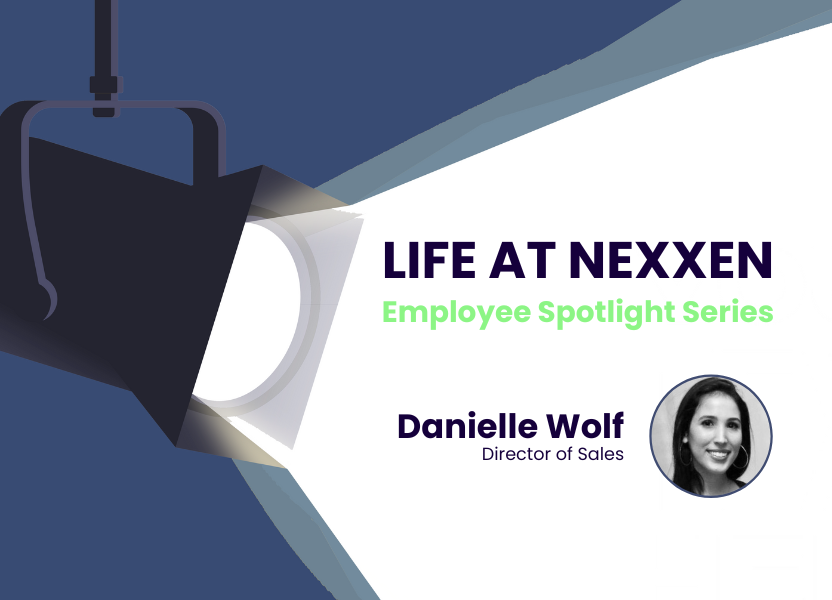
This month for Life at Nexxen, we spoke with Danielle Wolf, Director of Sales, West Coast. Danielle took us through her advertising career journey from media agencies to Nexxen, her most prized wins, and what she does in her free time.
How Brands Are Unlocking Customer Loyalty Through Data to Unleash Growth

How the NBA Finals Made $76 Billion Media Rights Seem Like a Bargain